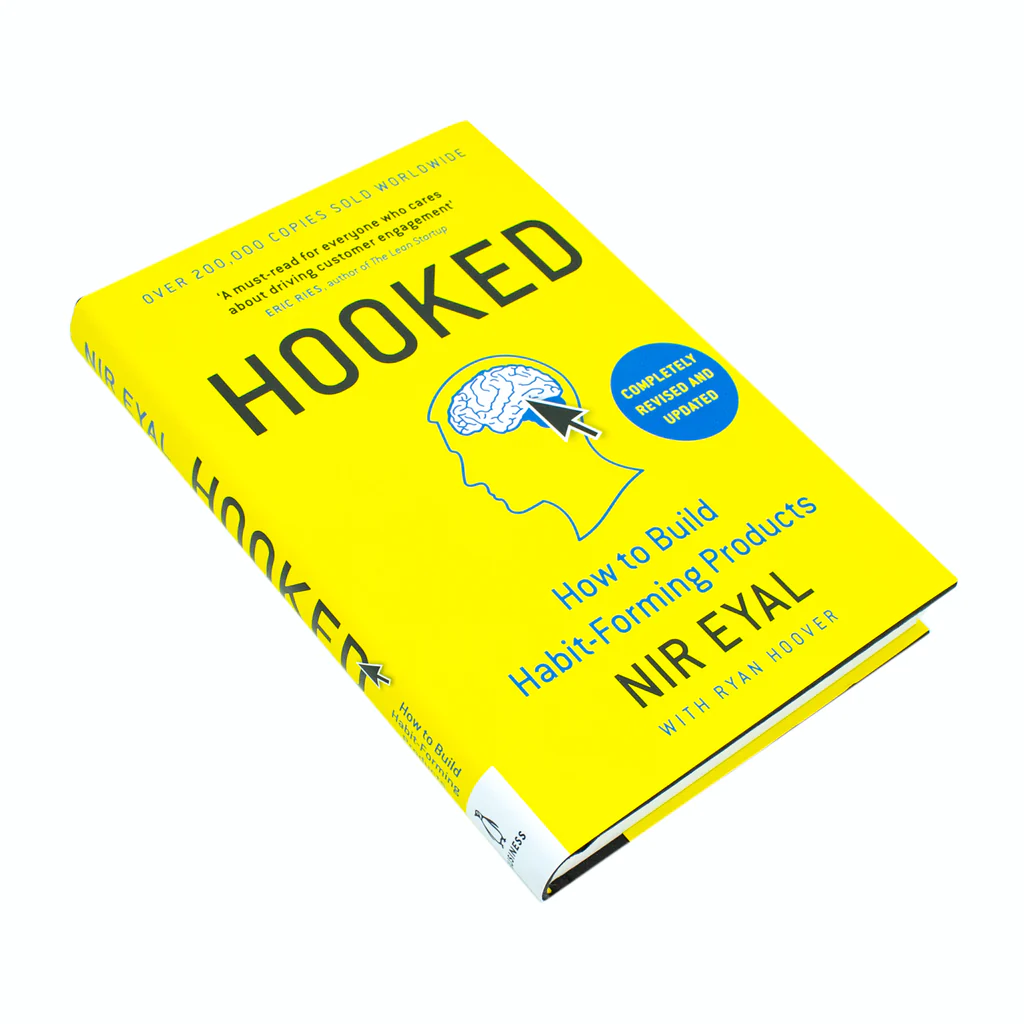
Explores the "Hook Model" a four-step process used by top tech companies to build products that users can't put down.
Nir Elay
December, 2013
About the book
Focus
Retention
Read Time
hours
Metadata
Why do some apps become daily habits while others are forgotten after one use? Hooked explains the deep-seated psychological "loops" that drive modern digital addiction.
More dope pixels.
Content
The Hook Model Cycle
Nir Eyal breaks down the four-stage process: Trigger (the spark), Action (the behavior), Variable Reward (the hit of dopamine), and Investment (the user's work). Mastering this cycle is the key to creating high-retention products that become part of a user's routine.
Variable Rewards are Key
The most fascinating part of the book is the psychology of "unpredictability." Human beings are hardwired to keep searching when the reward is variable (like a social media feed). This insight helps me design features that keep users engaged by always offering something fresh and interesting.
The Ethics of Habit Building
With great power comes great responsibility. This book forced me to think about the ethics of my work. Am I building a product that "helps" the user build a healthy habit, or am I just exploiting their psychology for "screen time"? It’s a vital conversation every designer needs to have.
My Personal Key Takeaways
Here are the key shifts in my perspective:
Emotional Triggers: Identify the negative emotion (boredom, loneliness, anxiety) that your product solves to create a powerful internal trigger.
Ease of Action: The harder it is to perform the core action, the less likely a habit will form. Keep the initial entry point as frictionless as possible.
Encourage Investment: When users put time or data into your app, they are much less likely to leave it. Design for meaningful "investment" moments.